Bronx Leaders Back Third Kingsbridge Armory Redevelopment, Betting on Events, Housing, and Cautious Optimism
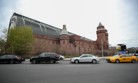
If the latest plan succeeds, the long-abandoned Kingsbridge Armory could become a much-needed engine of opportunity for the Bronx—yet past failures bode caution.
New Yorkers have become used to spectacularly unfulfilled promises in real estate. Yet few structures symbolize would-be grandeur and chronic inertia as well as the Kingsbridge Armory: 570,000 square feet of battlement-clad brick, a stone’s throw from Yankee Stadium but a world away from Manhattan’s glassy momentum. Since the early 1990s, the castle-like shell has loomed over the northwest Bronx, more monument to lost potential than community asset.
This may at last change. In recent weeks, Bronx political leaders have unveiled their most ambitious—and, they assert, most inclusive—vision yet for the armory’s future. The plan, shepherded by Borough President Vanessa Gibson alongside support from Governor Kathy Hochul and Representative Adriano Espaillat, aspires to transform the site into a multi-purpose events hub. Its central feature: an arena for major concerts, large enough to trouble the city’s usual venues.
Plans abound far beyond mere spectacle. The proposal sets aside space for local nonprofit offices, a sliver of light manufacturing, and even a dedicated International Salsa Museum—an allusion to the Bronx’s cultural heartbeat. Ambitiously, some 500 units of affordable housing would rise on the adjacent lot, and a health centre replete with an indoor pool is teased for community use.
Such all-things-to-all-people designs are de rigueur in City Hall, but this one is notably broad: a conscious departure from the paltry retail mall once championed by Michael Bloomberg (killed in 2009 for being too thin on good jobs), and the “ice palace” sketched in more optimistic years of the de Blasio administration—ultimately felled by tepid financier appetite and pandemic-era uncertainty.
For the Bronx, these stops and starts have been more than just fodder for the tabloids. The largely low-income borough remains Manhattan’s poor relation, its grand public assets often languishing unused. In the past decade, when the city’s population swelled by nearly 8%, the Bronx added fewer than 10,000 new affordable homes. The armory’s 500 planned units, while puny in the citywide context, could portend a shift if paired with jobs and amenities.
The economic ripples could prove substantial—or so proponents argue. Maddd Equities, the lead developer, promises the creation of a “true engine of opportunity,” layering event-site revenues with workspace, manufacturing, and social ventures. Yet the city must deliver not only jobs, but also ones worth taking; the ghost of the armory’s original retail plans, scuppered for their stingy wage projections, still hovers.
Meanwhile, political headwinds have not abated. Rival bidders have already filed suit against the city, alleging the ever-present whiff of political chicanery in the contracting process—a move that has delayed similar projects across the five boroughs. Political “buy-in” is essential, but consensus is still hard-won and prone to unravel; three mayors have tried (and failed) to fill this particular void.
Nor are all in the Bronx wholly convinced the current proposal puts community needs first. Past pushback has centred on jobs quality, gentrification fears, and whether such vast spaces can ever truly serve the local population. It remains unclear whether an events venue—inspired, perhaps, by the sleek success of Barclays Center down in Brooklyn—will flourish as neighbours hope or simply siphon profits to private operators.
A borough’s hopes—as fragile as its finances
Such aspirations must also be measured against the broader backdrop. Across America, vast armories and civic halls have slid into disrepair or found new life as money-spinners—Boston’s Castle transformed handsomely into a convention venue, Detroit’s Fort Wayne still searching for purpose. Yet in New York, where space is both asset and battleground, these transformations never come easy or cheap.
Financial hurdles, too, cannot be discounted. New York’s post-pandemic budget squeeze threatens most ambitious public-private ventures. The city faces yawning shortfalls, and capital for grand civic works now finds competition from migrant services, crumbling infrastructure, and debt repayment. The estimated cost (still undisclosed) is certain to stagger city bean-counters already bracing for further fiscal shocks.
Still, a cautious optimism is warranted. The constellation of partners—from city hall to Congress—suggests rare alignment, at least for now. And with the private sector anchoring the project, risk is nominally more spread than it was in the days of top-down mayoral cheerleading. The “third time’s a charm” mantra, as voiced by Ms Gibson, now echoes across committee meetings and community forums.
We are, however, sceptical of any project that promises everything to everyone. The age of silver-bullet urbanism is past; cities prosper through a thousand incremental improvements, not grand unveilings. The Bronx needs not one transformative event site, but rather more homes, better jobs, and sustained public investment. Even success here—if it comes—will hedge only a fraction of a borough’s needs.
Yet for all the jadedness, a filled armory offers more than symbolism. Success would denote a rare victory for the Bronx, and set a template—however modest—for turning civic detritus into living, pulsing public space. Should it fail again, New Yorkers will return to familiar shrugs, and the city will lose a little more faith in the promises of both politicians and developers.
In New York, the past can rarely be buried—or built over. But if the Kingsbridge Armory at last finds a purpose as plural as the borough it overlooks, the result could be, if not a marvel, at least a useful start. ■
Based on reporting from City & State New York - All Content; additional analysis and context by Borough Brief.