Bronx’s Latina Leaders Gain Power as Diaz Jr. Backs Borough’s Next Act
The sharp rise of Latina leaders from the Bronx portends profound shifts in the city’s political complexion—and its representation at the very top.
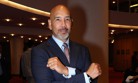
Ruben Diaz Jr. is no stranger to limelights or handshakes heavy with intent. Yet even he seems mildly astonished by the scale and speed of his borough’s political metamorphosis: in 2006, nearly every Bronx elected official was a man, usually white, often from long-dominant dynasties. Now, in several once-reliably white strongholds like Throggs Neck and Morris Park, Latina women, some with roots only a generation or two deep in New York life, command the ballot and the conversation.
Mr. Diaz, who steered the borough from 2009 to 2021 but famously bowed out of the 2021 mayoral contest, recently offered a post-mortem on the Bronx’s evolving leadership. His appraisal is unequivocal: “Dramatically.” The tally is instructive: except for a handful of holdovers—Carl Heastie, Jeff Dinowitz, Jose Serrano—nearly every Bronx official today is new since mid-2000s, many bringing Dominican or Puerto Rican heritage to an office whose walls, not long ago, displayed only Irish or Italian names.
Descriptions of this “new Bronx” are not, as Mr. Diaz is at pains to stress, mere boasts of identity politics. Rather, the borough’s ascendant Latina professionals bring heightened policy rigour, a more serious reception at city and state power tables, and a slice of lived experience increasingly representative of roughly one in four New Yorkers. In Diaz’s telling, Bronx politicians today command more attention not merely for their background—but for their depth and polish.
For New York City, the implications are hardly trivial. The Bronx has long been the city’s poorest borough, home to tenacious stereotypes, and enslaved by chronic underinvestment. The swift turnover in its political class signals not just demographic churn but the arrival of a fresher, professionally credentialed local elite—one less likely to tolerate old stigmas or accept fiscal neglect from city or state budgeteers. The borough now exports briskly climbing leaders, who increasingly shape city agendas, not simply lament Bronx woes.
Nor does this matter only for borough line-drawers. It bodes for City Hall itself. New York’s vast population—nearly 30% of it Latino—has yet to produce a single Latino mayor, comptroller, or public advocate, let alone a statewide governor or senator. Mr. Diaz’s own near-candidacy hints at how close matters have come, and how social inertia, or private priorities, can halt what once looked inevitable.
There are subtler effects, too. The shifting complexion of Bronx leadership augurs changes in policy priorities: more attention to public health (apt, as Mr. Diaz now works for Montefiore Einstein), education, rent burdens and small business survival. A generation of female and Latino officials bring their own outlook on criminal justice, housing, and what urban “success” ought to look like. Nor is this political turnover frictionless—the rise of technocratic, self-confident new leaders does not automatically open city wallets wider, nor does it erase the hard calculus faced by families on below-median incomes.
Rival boroughs should take notes. Manhattan’s council delegation remains a largely Harvard and NYU affair; Brooklyn politics are punctuated by their own ethnic swings but few shock upsets. Only Queens, with its own surging Asian and Latina candidates, reflects a similar quickening. In contrast, the stasis in parts of Staten Island would appear stubborn, even quaint.
The pattern is not unique to New York. Boston, Chicago, and Los Angeles have all seen Latinas and other women of colour vault to citywide roles faster than in the five boroughs. In Los Angeles, Karen Bass, a Black woman, now serves as mayor—though Latinos make up nearly half the city’s population. Yet New York’s unwieldy party machines, bruising mayoral primaries, and enormous media scrum have conspired to keep the city’s top jobs intimidatingly elusive. Many reckon the next two election cycles may prove decisive.
A question of citywide ascent
The bottleneck, observers note, comes not just from the pool of candidates but from the city’s convoluted party machinations. Bronx female legislators, for all their buoyant local support, have yet to build the deep fundraising and cross-borough coalitions needed for citywide or statewide fights. Mr. Diaz’s lament—that “that’s a conversation that the Latino leadership needs to have within itself”—is only partly rhetorical.
Money, institutional support, and positive citywide name recognition, the usual handmaidens of a successful mayoral bid, remain in paltry supply for most Bronx politicians. Yet the calculus may be changing. With the current city administration dogged by criticism and political fatigue, the voter’s appetite for fresh faces, especially those who reflect the median New Yorker far better than their predecessors, may be newly robust. Political sophistication, to borrow Mr. Diaz’s preferred term, must now translate into policy results if these local leaders are to parlay borough prominence into citywide authority.
There is, however, a useful scepticism to retain. Demography is not destiny. Borough-to-city transitions often falter on the unglamorous rocks of coalition-building, campaign finance, and the arcane rituals of New York machine politics. Nor is the elevation of one group a panacea for old problems—Bronx poverty, struggling schools, and high rents will test the capacities of anyone who aspires to citywide leadership.
Still, there is much to commend in the latest Bronx experiment. The borough, for decades New York’s political backwater, now exerts pressure on the limits of the city’s meritocracy. Parties elsewhere should take heed: a system with low churn risks staleness; one bristling with new actors and social mobility, paradoxically, becomes more reliable and less brittle.
For New Yorkers who chafe at being ruled by distant or unresponsive power, the sight of a government that looks a little more like them—and one that is more robustly debated in multiple languages—offers tepid but real hope. Leaders who both embody and transcend their constituency’s background may re-anchor city politics in the lived experience of the majority.
The city’s great political tease—when will vast Latino populations actually translate presence into hard power at the top?—remains unresolved but approaches denouement. This time, the momentum may be too brisk for the machine to bottle.
Change, as the Bronx now demonstrates, can be both dramatic and overdue; the real surprise, perhaps, is how long New York’s politics stayed as frozen as they did. ■
Based on reporting from City & State New York - All Content; additional analysis and context by Borough Brief.