Central Park Needs More Bike Lanes, Not Just Slower Speeds, If We’re Serious
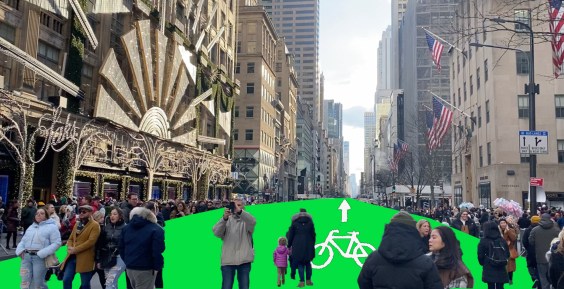
New York’s Central Park now faces not a problem of unruly cyclists, but of puny infrastructure—and how the city manages, or ignores, the imbalance may shape the future of shared public spaces.
On a typical spring Saturday, Central Park swells with humanity: joggers tracing the inner loop, tourists ambling to Strawberry Fields, children zigzagging on scooters, and streams of cyclists weaving among them. In a city of 8.5 million citizens and far more daily ambitions, this 843-acre green rectangle—that Frederick Law Olmsted once called “the lungs of the city”—has become not only the playground of Manhattan but a battleground for limited space.
Now Mayor Mamdani looks set to cap the Central Park Drive speed limit at a staid 15 miles per hour, following through on a plan inherited from his predecessor. The rationale, many suggest, is safety. Yet accident statistics reveal a more complex tableau: most high-severity incidents do not stem from reckless riders but from the forced cohabitation of too many uses—commuters, athletes, strollers—crammed onto a single congested loop. In other words, the true malady is scarcity, not speed.
This latest policy salvo looks frightfully familiar. When demand outstrips supply, New York has a habit of reaching for the regulatory spanner instead of the builder’s blueprints. Cycling advocates, planners, even the city’s own Central Park Drives Safety and Circulation Study (2024) concur: what is needed is not fewer risks, but more real estate. When space is rationed rather than expanded, friction is inevitable.
The contrast with London, our nearest demographic cousin, is both galling and instructive. The British capital sank roughly $100 million into its cycling infrastructure in 2025 alone, extending a web of protected lanes into the viscera of its central business district. New York, for all its Vision Zero rhetoric and headline-grabbing targets, lags far behind. Its annual mileage of new protected bike lanes remains tepid, often bested by far smaller European cities. The city’s much-vaunted Green Wave plan has produced more glossy press releases than physically separated kerbs.
The economic cost of this stinginess is well camouflaged but significant. Lacking alternatives, cyclists and runners funnel into the park’s loop, where delivery e-bikes jostle with club athletes and families on rented Citi Bikes. This congestion sows ever more fraught encounters, which saps public confidence and—through periodic injuries—imposes surreptitious burdens on the city’s health and liability budgets. That crowded feeling is not merely an inconvenience, but a drag on the city’s ability to encourage genuinely green modes of transport.
Nor are the repercussions merely local. As climate-minded city leaders from Paris to Bogotá invest in the infrastructure of pedal-power, New York’s cities-weary approach sends a faintly myopic message about its priorities and, by extension, its future fitness for high-skill residents and globe-trotting tourists alike. A policy that aims to protect, but instead stymies, belongs to a defensive urbanism—a patching of holes, but no vision.
The options for redress are laid out in black-and-white, if only policymakers would read their own reports. Recommendations from the Central Park Conservancy’s 2024 study remain largely unimplemented: develop bikeways along the park’s transverses and perimeter roads; promote use of park arches for pedestrians, reducing the at-grade crossings that most frequently portend disaster; commission a grade-separated crossing at the Delacorte Theater, a crucible of near-misses for years. Each proposal is both technically feasible and tested elsewhere.
Then there’s the Bridle Path, that serpentine ribbon designed in an era when equestrianism was a common club good. Opening it, judiciously, to cyclists would relieve pressure on the main drive with minimal investment. Indeed, most large urban parks—Hyde Park, Berlin’s Tiergarten, even Tokyo’s Ueno Park—feature similarly adaptive reuses. Here, New York stands timid, clinging to anachronism.
Scarcity breeds conflict and, ultimately, missed opportunity
What, then, keeps Gotham in this holding pattern? Some blame inertia within the Department of Transportation; others, the delicate dance of codifying changes with the Parks Department’s gatekeepers. Budget concerns are routinely cited, though they shrink beside the city’s infrastructure outlays for roads and bridges. Perhaps it is the political calculus that it is easier to mollify a vocal anti-cycling lobby with a speed sign than to marshal bulldozers for ribbon-cutting.
Nationally, too, the city’s competitive position is at risk. American metropolises from Seattle to Chicago now vie for the “most bikeable” laurel, knowing that mobile talent, particularly younger professionals, prizes not only housing but also sustainable mobility options. If New Yorkers are to keep up—and lure back those decamped during the pandemic exodus—the city will need to offer not simply density, but grace in movement.
We reckon the present approach does little to address either short- or long-term challenges. Lowering the speed limit on Central Park’s main drive may mollify critics in the short run, but it does so at the cost of utility and, ultimately, safety. Rather than pitting users against one another in an ever-shrinking commons, the administration should pursue abundance: more space, smarter design, and policies which prioritize separation over restriction. As the city’s very own consultants have made plain: where bikes and walkers do not jostle, tempers and accident rates both stay puny.
New York fancies itself a world city, but its cycling infrastructure is distinctly second-tier. If Mayor Mamdani seeks a legacy beyond crowd control, he must do more than repaint white lines and hoist new signs. True urban stewardship is measured by whom a city enables to move, not merely how it curtails the few who dare go fast.
For Central Park’s next century, New York’s leaders face a choice: ration liberty, or build capacity? The answer—as elsewhere—will tell us whether this tight, fractious metropolis can embrace abundance, or merely manage decline. ■
Based on reporting from Streetsblog New York City; additional analysis and context by Borough Brief.