Mamdani Eyes Low-Traffic Zones for Western Queens, Betting Big on Calmer Streets
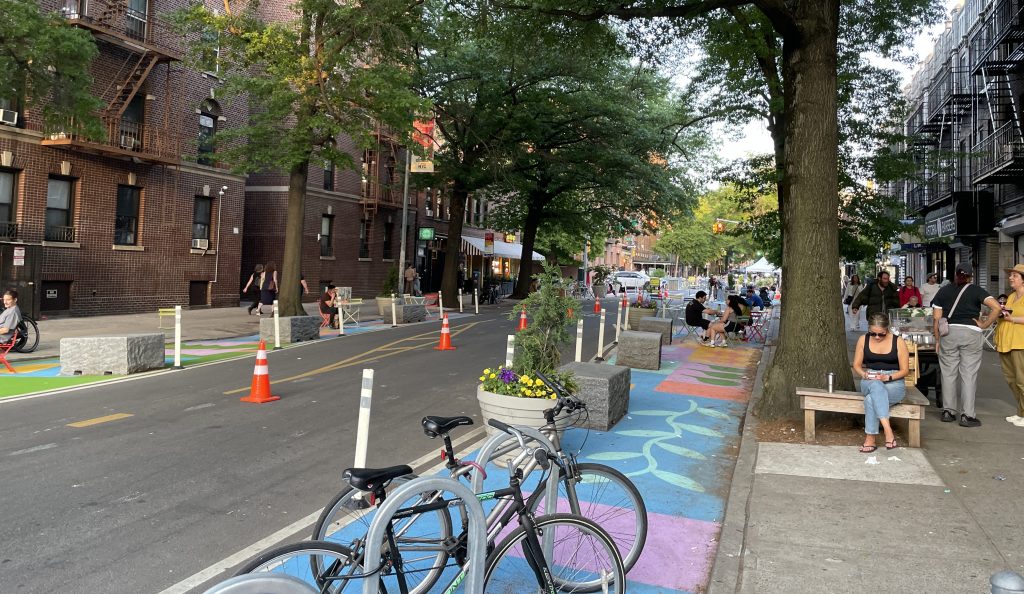
Exported from London and Barcelona, low-traffic neighborhoods could soon reshape Western Queens—and, with luck, the rest of New York City’s choked roads.
It is a familiar Astoria sight: a narrow sidewalk pinched between parked cars and a surging, cacophonous tide of honking, inching traffic. During a typical rush hour, drivers jockey for marginal gains, often spilling onto side streets in hopes of shaving seconds off their journeys. Yet on a recent Monday evening, a different kind of crowd gathered in western Queens. This was not a queue for the latest buzzworthy eatery, but rather a congregation of policy advocates, local organizers and schemers with a shared aim: to trade the city’s “rat runs” for a new urban promise—low-traffic neighborhoods (LTNs).
The concept, propelled into the city’s policy conversation by Assembly Member Zohran Mamdani (now based in Gracie Mansion but formerly of the area), is straightforward. LTNs deploy physical and regulatory measures—bollards, plantings and modal filters—to deter short-cutting by private cars through residential districts. The idea is to nudge “non-essential” through-traffic back onto arterial roads, while still permitting access for emergency vehicles, deliveries, and locals. Those who extol the arrangement point to past successes in neighborhoods such as Jackson Heights and Sunnyside, where targeted street redesigns trimmed traffic and pedestrian injuries.
The current gambit: to move from wonky trial balloons to systemic transformation. Monday’s Astoria forum, hosted by the urbanist nonprofit Open Plans, saw advocates review foreign case studies and hash out tactics. “Western Queens has already shown what’s possible when neighbors lead the way,” remarked Emily Chingay of Open Plans, urging that “communities are eager for calmer, safer streets that bring people together.” Her audience, a cross-section of open streets organizers, seemed to agree that London-scale ambition is neither quixotic nor premature.
The evidence from across the Atlantic is compelling. Since the 1970s, London has experimented with LTN-style barriers. The city’s most febrile phase came during the Covid pandemic, when Mayor Sadiq Khan’s administration wove roughly 100 LTNs into the urban fabric between 2020 and 2022. By closing “rat runs”—those tempting shortcuts popularized by GPS apps—the city not only cut car traffic but also freed curbside space for thousands of bike hangars and expanded walkways.
The British precedent hints at broader gains. Published analyses from Transport for London suggest LTNs slashed local motor traffic by up to half without unduly rerouting congestion onto the main thoroughfares. Bus journeys along filtered corridors quickened, air quality improved, and—initially to the surprise of sceptics—emergency response times remained steady. Critics warned about inconvenience and displacement, but the predicted gridlock seldom materialized. Instead, there was a tangible dividend for pedestrians and cyclists, especially children and the elderly.
For New York, the stakes are not trivial. The city’s “Vision Zero” safety campaign, launched in 2014, has not prevented traffic fatalities from creeping back up: in 2023, more than 250 people died in crashes, a grim echo of the pre-pandemic norm. In districts like western Queens, where population density rivals anywhere in North America, local cut-through traffic presents a perennial hazard. Bitter recent skirmishes over open streets—those weekend pedestrianized blocks—reveal both the pent-up demand for sanctuary from traffic and the political delicacy of reallocating road space.
Importing the LTN model, then, would be no mere cosmetic tweak. It would demand a careful weaving of engineering solutions, regulatory muscle and relentless engagement with residents—not least to overcome the coalition of skeptical motorists, fretful merchants and status-quo-minded officials. The British have one tool New York notably lacks: a robust residential parking permit system, which helps police local access. Without such machinery, any LTN scheme here would risk a Swiss cheese effect—perforated by loopholes readily exploited by determined drivers.
In economic terms, the dividends could be sizable, albeit hard to quantify. London’s experience hints at uplift for small retailers along calmed corridors, as footfall improves. Fewer crashes translate directly into reduced costs for policing, health care and lost productivity, while even modest reductions in vehicular traffic could make short-haul bus rides less Sisyphean. Globally, cities that have tamed their residential streets—most notably Barcelona, with its “superblocks”—have not seen property values fall, nor urban vibrancy dim.
A path forward for New York’s crowded curb space
Still, American urban alchemy is seldom straightforward. Imposing London’s model upon New York’s anarchic streets, without modification, courts disappointment. Our city’s enforcement systems are patchier, our tolerance for inconvenience lower, and the palette of political priorities more variegated. It is easy to imagine a plan undone by shoddy bollards, inconsistent signage, or half-hearted policing.
But data, not anecdote, ought to steer the coming debate. Evidence from London, and to a lesser extent Paris and Barcelona, suggests that fears of catastrophic traffic displacement tend to be overblown. Cities that invest in LTNs see a real, measurable dip in car use and a more convivial streetscape—provided that planners are ready to refine their approach and treat local concerns as a primary constraint, rather than an inconvenience to be brushed aside.
Nor should we understate the symbolic resonance of such a program. A credible, well-implemented LTN in Astoria or Sunnyside would signal, both to New Yorkers and to sister cities across America, that “rebalancing” the public realm need not mean sacrificing economic or civic vitality. With Mayor Mamdani’s credibility and the accumulating expertise of groups like Open Plans, Queens could offer a meaningful test—one with the potential to echo well beyond Roosevelt Avenue.
There are, inevitably, trade-offs. Residents accustomed to unfettered curb access and speedy door-to-door drop-offs will grumble, and some businesses may fret about deliveries. But we reckon these concerns, while real, can be mitigated with granular planning, open communication, and—where needed—material investments in infrastructure. Success will require political tenacity and a willingness to learn from foreign precedent, not simply cite it.
It is tempting to view the LTNs of London and Barcelona as urban panaceas, portals to a calm, prosperous future. We prefer a more measured view. Properly conceived LTNs are not an end but a means: a nudge toward streets where people, not just passing cars, feel at home. Astoria’s activists and Mamdani’s boosters may be on to something. The challenge now is to move from good intentions to durable, data-backed change—no small feat, but one New York can ill afford to duck. ■
Based on reporting from Streetsblog New York City; additional analysis and context by Borough Brief.