NYC Nurses Strike Likely to End as Last Hospital Strikes Tentative Deal Before Valentine’s Day
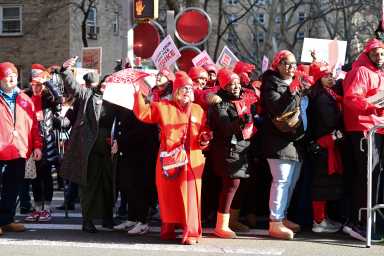
After a month-long strike punctuated by arrests and negotiation stalemates, New York City’s nurses are poised to return to work under contracts that could reshape the terrain of urban health care labor relations.
New Yorkers complained—sometimes in hoarse voices—of delays in wards and clinics, but the most striking recent sound in the city’s hospitals was silence: the absence of the usual hum of nurses, replaced by the resolute chants of picketing staff on bitterly cold sidewalks. For thirty days, more than 15,000 nurses affiliated with the New York State Nurses Association (NYSNA) walked off the job across three major private hospital systems—NewYork-Presbyterian, Mount Sinai, and Montefiore. Nurses, hospital executives, and a small army of mediators have now brokered a tentative armistice. All eyes now turn to rank-and-file ratification votes, which, if proceeding as anticipated, will return most nurses to their stations by February 14th.
The truce hinges on a three-year contract promising over 12% salary increases—a sum intended to salve retention woes and attract new caregivers to the city’s overburdened wards. Other tentpoles of the accord include enforceable nurse-to-patient ratios, enhanced protections against workplace violence, and an unusual provision: explicit safeguards against displacement or deskilling by artificial intelligence. The parties have not disclosed every clause, but have trumpeted the outcome as “historic.”
The relief in officialdom was palpable. NewYork-Presbyterian’s spokesperson lost little time in confirming the agreement, echoing the measured optimism evident in statement after statement this week. Council Member Justin Sanchez of the Bronx, speaking for many in city government, praised the deal as “a turning point” and invoked the oft-repeated civic truism that essential workers are the heartbeat of New York’s public life.
For the city’s vast hospital infrastructure, the cessation arrives not a moment too soon. Manhattan and the Bronx, where all three affected facilities stand, experienced weeks of acute disruption. Operating theatres scaled back non-emergency procedures; agency nurses (often pricier and less experienced with local systems) filled some—but not all—gaps; and emergency rooms at times verged on chaos. Administrators, who had relied on contingency staff and crossed their fingers, can now resume normal rhythms and, not incidentally, halt the hemorrhaging of goodwill—and revenue—precipitated by the standoff.
Even so, the aftershocks will ripple beyond mere logistics. The contracts’ provisions—particularly the new teeth given to staffing levels—are likely to raise operating costs for already margin-squeezed institutions. Non-profit hospitals, many perpetually close to the red, must re-calculate budgets in a climate where patient volumes still lag pre-pandemic buoyancy but wage escalation seems to have become the order of the day. The 12% pay rise, though generous by nursing standards, is only slightly above inflation since 2022 but nonetheless sets a precedent that hospital boards elsewhere may find galling—or emboldening, depending on their balance sheets.
The agreement’s implications stretch beyond the accounting ledger. By forcing explicit limits on the encroachment of AI and automation in clinical labor contracts—a first in New York—the nurses have staked a claim on the technological future of their profession. For developers and health-tech entrepreneurs, this portends trickier negotiations ahead; for nurses, a bullish assertion of professional identity amid relentless digital transformation.
A harbinger for national hospital labor?
New York is not alone in navigating fresh labor militancy among hospital workers. Nurses in California, Minnesota, and Massachusetts have mounted walkouts or threatened them over eerily similar grievances: staffing levels, workplace safety, and the encroachment of digital managers. Unlike in Europe, where nurse strikes are regular if sometimes ritualised affairs, American hospital strikes remain rare—American nurses walked out fewer than two dozen times in the previous decade. That makes New York’s month-long dispute the lengthiest and largest in the city’s history, and the terms more than a local curiosity.
Early returns suggest rank-and-file approval, but the deal’s durability will depend on implementation. If hospital managements fudge or slow-walk their newly mandated staffing ratios, another round of picketing is hardly inconceivable. Yet the mutual exhaustion visible on both sides—manifest in unusually conciliatory joint statements—augurs for a season of truce. The challenge for administrators will be to square the new expense with persistent funding shortfalls and, perhaps more pressingly, surging demand as the city’s post-pandemic population rebounds.
The outcome also provides grist for policymakers to re-examine state and federal support for hospital systems, especially those serving lower-income boroughs. New York’s push for minimum staffing, if it works, may serve as precedent for other urban centres. Whether it will translate to improved care—a claim made in every nurse speech and press release—remains to be tested. Empirical studies suggest that higher nurse staffing does correlate with lower patient mortality, but causation in New York’s labyrinthine health system tends to evade neat proof.
Our reading is sceptically optimistic. The settlement demonstrates the concrete power of collective bargaining in a sector often portrayed as immune to ordinary labour dynamics. It is, in many respects, a reassertion of human judgment over algorithm, of wage solidarity over false digital economy efficiencies. At the same time, it underscores the brittle economics of American health care, where financial margins are thin, tempers run shorter, and public patience—especially for further industrial action—may soon wear away entirely. That the city’s leaders have dodged extended paralysis is to be welcomed, but the underlying tensions, from cost pressures to workforce shortages, persist.
For the city that never sleeps, the coda of this drama is less a hard-won peace than a fleeting armistice. All sides have earned a brief respite. The need for deeper, structural reform of health sector economics, and a more candid reckoning with the limits of both automation and austerity, remains as unyielding as ever. ■
Based on reporting from amNewYork; additional analysis and context by Borough Brief.