Trump Demands “Correct” Answers From Iran as Oil, Netanyahu Await His Next Move
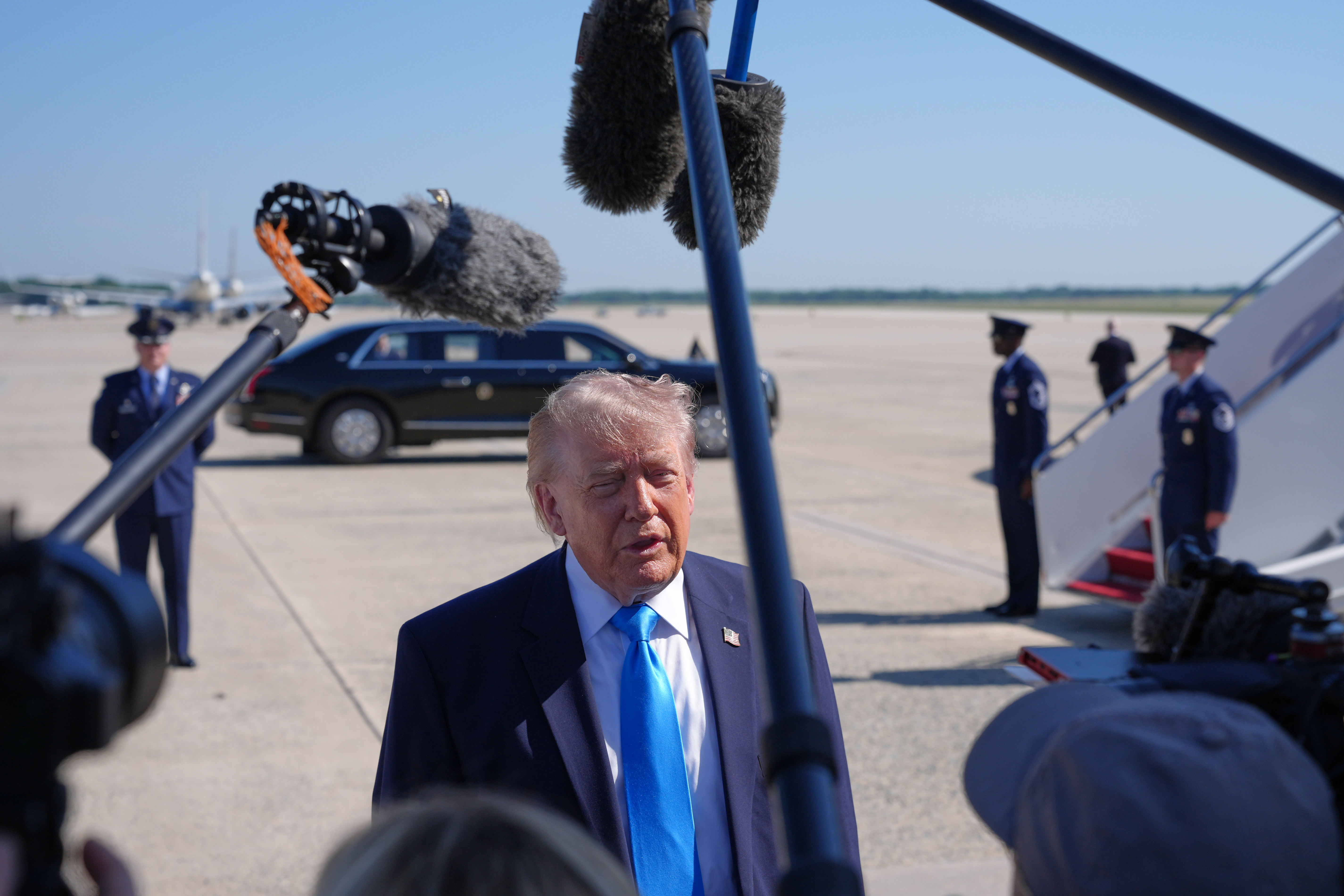
Rhetoric over Iran’s nuclear ambitions is roiling global oil markets—and unnerving a New York anxious about both war and wallets.
President Donald Trump is not known for understatement, but even by his expansive standards, his latest salvo on Iran’s nuclear programme was arresting. Returning to Washington this week, he aired a version of measured menace: unless Iran delivers the “correct” answers, things will “precipitate very quickly.” His administration, he said, is “ready to act.” For New Yorkers, awake to the world’s volatility and the city’s own cosmopolitan veins, such pronouncements are more than distant thunder; they are a source of both market jitters and sidewalk debates in every borough.
At the heart of the news lies the fragile, months-old ceasefire, brokered after hostilities erupted on February 28th. With negotiations deadlocked, Mr Trump gave Iran a final ultimatum, pressing for “100%” cooperation on its nuclear activities. The stakes are plain: the revival of attacks—whether by America, Israel, or both—looms if diplomatic overtures founder. Meanwhile, Tehran’s leadership has issued assurances of “rapid and powerful” reprisals, boding ill for a region already saturated with dread.
The immediate cause for intervention, according to Mr Trump, was Iran’s march toward nuclear capability—an assertion that conjures memories of previous American forays based on condemnatory intelligence. Should negotiations collapse, U.S. forces stand poised; Mr Trump claims that 1,600 oil-laden ships are queued in the Strait of Hormuz, ready to send oil prices plunging once released, as if New York’s gas pumps were merely a chess piece in global brinkmanship.
For the city itself, the implications ripple outward. Wall Street’s traders, fixated on oil futures, watch Middle Eastern headlines with an intensity bordering on obsession. A “precipitous” drop in oil prices, if it materialises, could deliver a windfall for cabbies and warehouse owners, even as energy sector jobs shudder at the prospect. Businesses in Queens and Bronx, for whom fuel is no small line-item, may welcome cheaper bills, while others reckon with the prospect of market yo-yoing.
Yet, volatility rarely breeds stability: past experience warns that geopolitical shocks can rebound unpredictably. Any military escalation between the United States and Iran risks disrupting not just fuel markets but alliances—while also swelling the city’s already restive political moods. New York is, after all, both emblem and microcosm for America’s own demographic splitting: its large Iranian-American population faces a familiar tension, caught between pride for homeland and worry for family left behind.
The spectre of further Middle East conflict also carries more corporeal consequences. Following previous spikes in tension, New Yorkers have reported a litany of threats, hate crimes, and ugly rhetoric. Should airstrikes resume or new sanctions bite, city agencies may again bolster security around synagogues, mosques, and consulates—an all-too-regular calibration for the NYPD. Mr Trump’s comment that Israeli Prime Minister Netanyahu “will do anything I ask” hardly bodes for restraint, and hints darkly at worsening proxy struggles that may echo from Gaza to lower Manhattan.
Wider afield, New York’s posture is far from unique. London, Paris, and Berlin weigh in with their own handwringing, even as they lack America’s capacity to dictate the tempo. In past crises, European oil terminals have seen their own cargoes snarled by Gulf unrest. Tokyo and Seoul, dependent on tankers traversing the Strait, have cause to fret. Still, it is America—and, uniquely, New York—that remains the stage where global politics meets the gritty realities of commuter costs and foreign affairs.
Political bravado, economic angst
There is, too, an unmistakable echo of history. The Iraq and Afghanistan wars were announced with similar certainty, only to generate costs—trillion-dollar and otherwise—that haunt American cities still. Claims of imminent weapons programmes, then as now, were deployed as justification for interventions dressed in the thinnest of transparency. Those episodes suggest a note of caution for today’s New Yorkers, who must weigh the promise of cheap gas against the risk of a protracted, expensive quagmire.
This charged diplomatic theatre comes as the U.S. Congress moves to debate a resolution to end the conflict in Iran—a process, perhaps, with as much impact on Manhattan as on Mesopotamia. Tehran’s claims of arresting 19 “terrorists and U.S. collaborators” is a familiar, performative gesture, but also a reminder of how these duels play out far from the UN’s debating floor on First Avenue.
Of course, few doubt that hard bargains must be driven with Iran. But technocratic clarity is prone to be obscured when presidential pronouncements hint that a key ally, Israel, will serve at Washington’s pleasure. Such rhetoric makes a mockery of public diplomacy, and could embolden hardliners on all sides—compounding, not containing, the risks of escalation.
We reckon, ultimately, that New Yorkers are right to treat talk of swift, total victory with deep scepticism. The city’s pluralism is itself a ballast against the bluster of foreign-policy posturing. Perhaps better to measure success not by the number of oil tankers dispatched, but by the absence of new causes for grief, in a metropolis already accustomed to weathering the blows from abroad, whether they be financial, political, or mortal.
Calmer heads would do well to recall that a city with as many passports as pizza joints prospers when order, not improvisation, governs the world’s troubled regions. The real test of leadership—local or national—is not what is promised in front of the cameras, but what is delivered to the city’s thrumming life: safety, stability and a steady hand on the global tiller. ■
Based on reporting from El Diario NY; additional analysis and context by Borough Brief.