Trump Eyes Immigration Question for 2030 Census, New York’s Funding Formula in the Balance
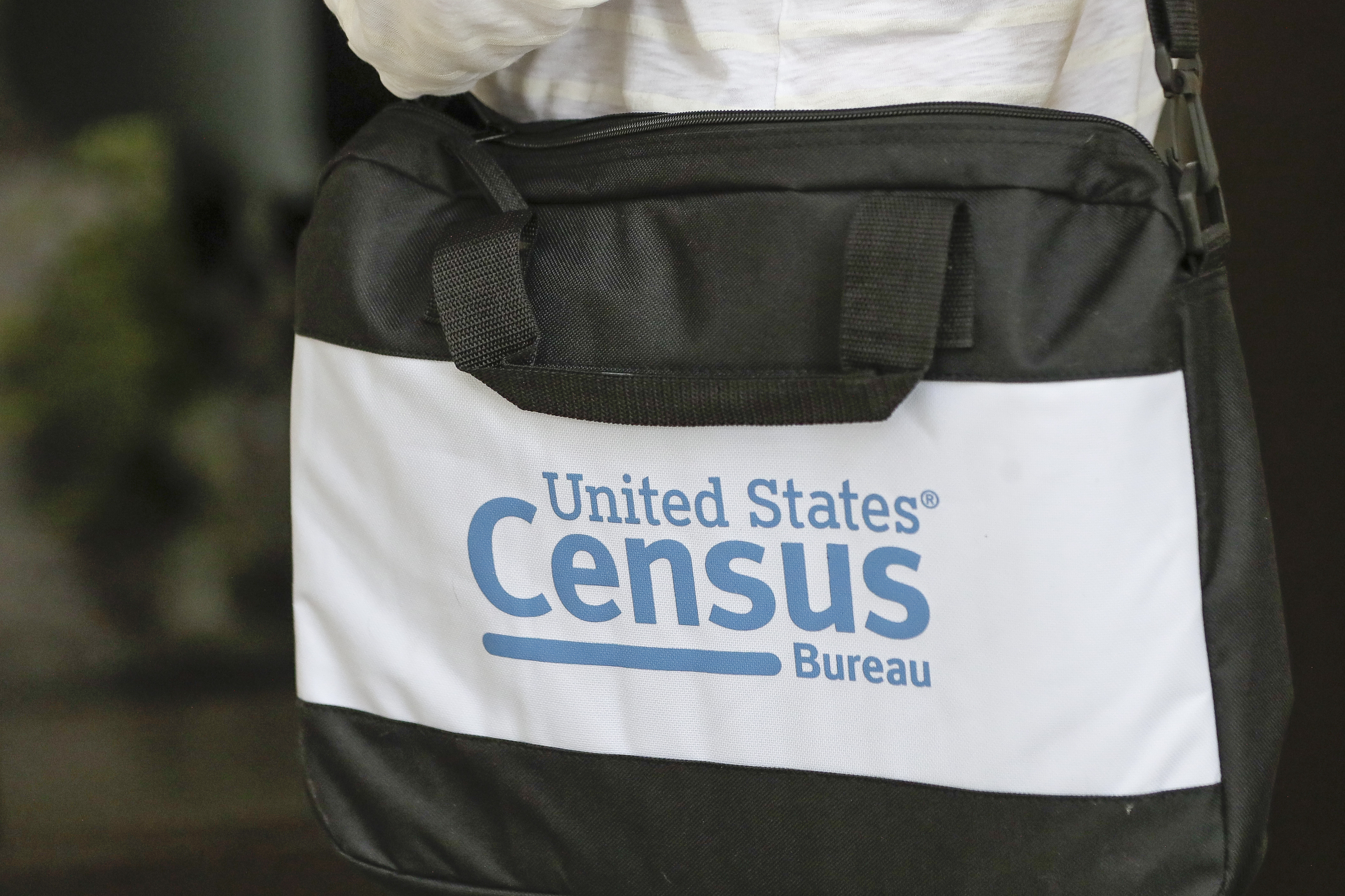
With a pilot immigration-status question for the 2030 census looming, New York’s future funding and political heft may ride on the nation’s appetite for counting everyone—citizen and newcomer alike.
New York is a city of numbers: 8.3 million residents, 200 languages, and, according to city officials, nearly 3.1 million foreign-born residents—a figure that could be both civic pride and political flashpoint as the US Census approaches its decennial reckoning in 2030. The 2010 and 2020 counts, both contentious in their own right, are set to be overshadowed by a simmering debate over whether the next national headcount ought to peer beyond citizenship to legal status, a change with significant implications for America’s largest metropolis.
The flashpoint is a proposed census question explicitly asking each household about immigration status—a move foreshadowed by Donald Trump’s recent statement that “those here illegally WILL NOT BE COUNTED” in the 2030 count, a message broadcast via his Truth Social platform. This prospect, first introduced and blocked by federal courts during his first term, has since resurfaced in the form of a pilot survey announced this spring. In April, the Census Bureau quietly began testing the measure with some 150,000 households across Alabama and South Carolina.
The census, as mandated by Article I, Section 2 of the Constitution and clarified by the post-Civil War Fourteenth Amendment, is foundational to both money and power: It guides the apportionment of $1.5 trillion in annual federal spending and divvies up Congressional seats and electoral votes. For states like New York, where more than a third of residents are immigrants, the inclusion—or omission—of undocumented people could mean paltry budgets for schools and hospitals or a net loss of seats in Congress. Counting, it seems, is not just arithmetic; it is high politics.
Were only legal residents and citizens to be counted, the impact on New York would be swift and substantial. The city would risk losing hundreds of millions in federal support for vital services, imperiling already strained public schools, overburdened emergency rooms, and infrastructure projects. Representation in Washington could shrink, further diminishing New York’s influence as states with fewer foreign-born residents gain at its expense.
The secondary effects would ripple throughout the city’s economy and society. New York’s immigrants fuel nearly a third of its workforce—the cooks, nurses, tech workers, and drivers who help the five boroughs function. Excluding the undocumented from the official figures (or driving them into the shadows with a pointed question) could distort everything from housing policy to business investment, setting off a feedback loop of under-resourcing that would be felt by all: citizen and non-citizen alike.
Politically, the census fight reflects broader anxieties over national identity. The notion of a two-tiered populace—one counted, the other disappeared from official tallies—runs counter both to the city’s ethos and to the intent of the Fourteenth Amendment, which requires “counting the whole number of persons in each state.” Such moves strike us as both legally dubious and economically self-defeating, particularly in a city whose history and fortunes have long been tied to waves of immigration.
Opponents of the move argue, with data on their side, that asking about status would suppress participation. A 2019 Census Bureau study found as many as one in five immigrant households would shy away from the count if the question were included; local advocates estimate millions could remain unenumerated. This reticence is not unfounded: tales of federal agencies sharing data are enough to chill even those documented or naturalized, especially in the wake of high-profile ICE raids across the country.
The pilot project now underway is, in theory, an exercise in survey methodology; in practice, it is a political trial balloon. The roster is notable—Alabama and South Carolina were chosen not for their immigrant populations, but for their conservative political profiles. The results will doubtless be picked over by policymakers eager to discern whether the question produces meaningful data or simply a less honest count. One thing is likely: New Yorkers will be watching closely, if warily, for any sign that their city’s diverse population may be discounted.
Precedents and prospects—how the US counts, and why it matters
Globally, the US would not be alone in tweaking census methodology to serve political ends. In many countries, census questions about ancestry, language, or race are flashpoints for division or vehicles for policy mischief. Yet, America’s century-old tradition of aiming for universality—citizenship agnostic, color-blind—remains its signature. That tradition helped make New York, and cities like it, as dynamically chaotic as they are. It is notable that Europe’s own census regimes, often more precise about legal categories, rarely wade into the divisive waters of migration status. The United Nations itself warns against attempts to exclude non-citizens from national counts, citing the potential for bad policy and social fissure.
There is a certain irony in the fact that, for all the American hand-wringing over porous borders, the census—the most bureaucratic of undertakings—may yet prove the arena for the country’s next great immigration battle. The Trump camp’s arguments are couched in the language of “law and order,” but data and precedent suggest the practical outcome would be to misallocate resources and cripple cities that, like New York, power the national economy.
It is not lost on us that the legal terrain is well-trodden. The Supreme Court, in Department of Commerce v. New York (2019), rebuffed the Trump administration’s 2020 attempt to add a status question, holding it “arbitrary and capricious.” We are sceptical that new litigation would yield a different outcome; the constitutional language remains on the side of counting “persons,” not citizens, and the practicalities of government demand as full a picture as possible.
Still, this pilot portends years of wrangling and uncertainty—just the sort New York, already wrestling with fiscal shortfalls and a battered social contract, can ill afford. With immigration continuing apace, the stakes are not so much about who gets counted as about whose problems get seen, measured, and, ideally, solved. In city hall and in Washington, the coming census could mark an inflection point: does America still aspire to be the land of all its inhabitants, or only some?
For a city that has always thrived on inclusion—sometimes messy, often loud, invariably lucrative—shrinking the circle of belonging is a risky experiment. The census is, at heart, a mirror; to cloud it out of political fear is, as ever, to see less clearly, and to govern worse. New York, and the nation, would be wise to heed the lesson before embarking on another census-driven bout of self-inflicted short-sightedness. ■
Based on reporting from El Diario NY; additional analysis and context by Borough Brief.